Nutrition
How to build balanced meals without counting every calorie
A practical, habit-based approach to building satisfying meals with flexible portions—without turning every bite into a math problem.
Nutrition can become complicated quickly. Tracking can be useful in the right situation, but it is not the only way to create meals that support your health, training, and everyday life. My Precision Nutrition Level 1 training informs a simpler approach: understand where you are starting, choose one useful practice, and build from what you can do consistently.
A useful nutrition plan has to fit your life
There is no single meal pattern that fits every person, schedule, culture, budget, preference, or goal. A plan can look excellent on paper and still be the wrong plan if it demands more time, preparation, or attention than you can regularly give it.
The coaching philosophy I learned through Precision Nutrition begins by understanding how a person actually lives and what matters to them. I start there too. Instead of asking you to follow someone else's ideal routine, I help you identify the smallest meaningful improvement that makes sense in your current one.
Build the meal before you measure the meal
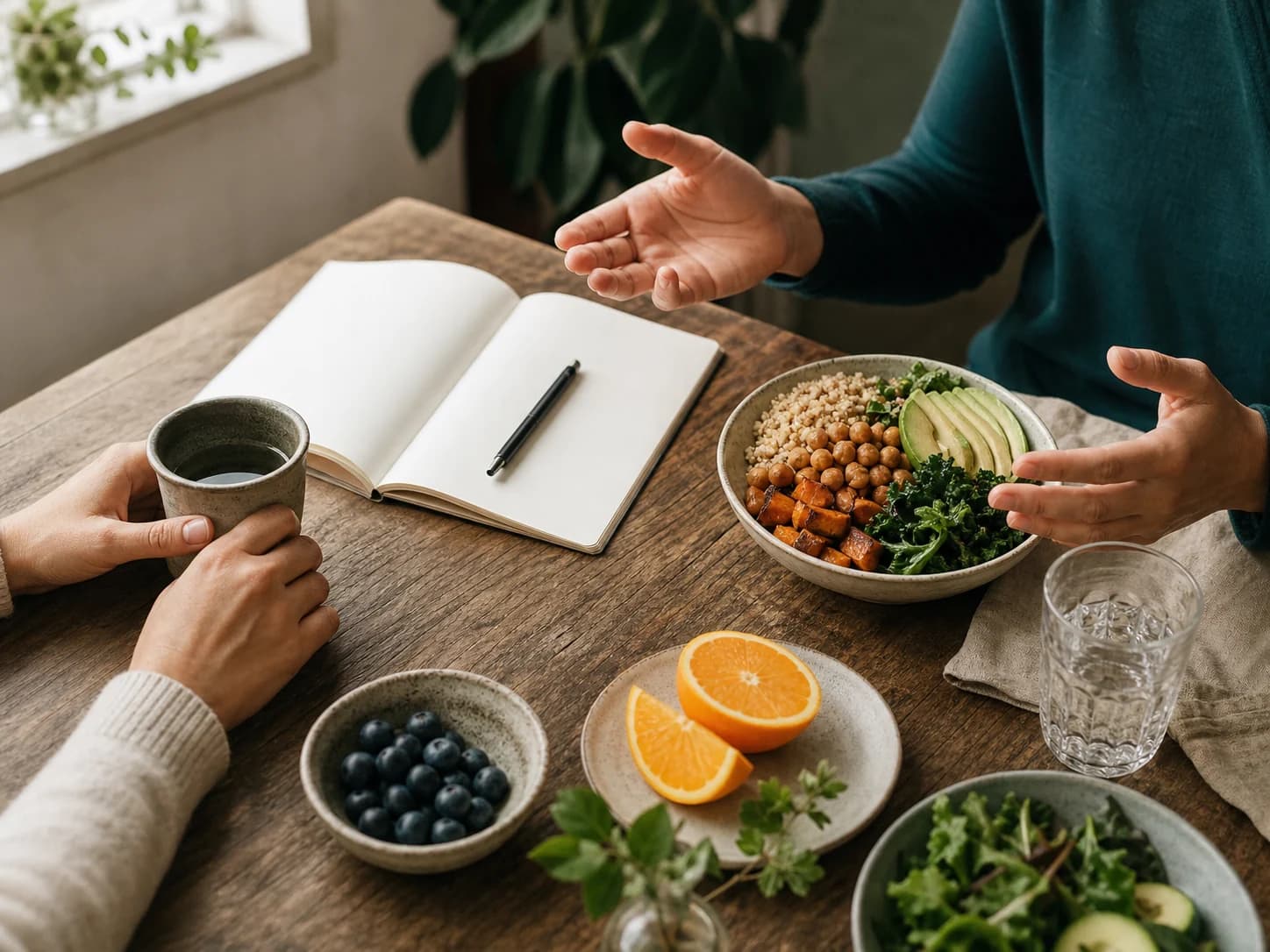
A simple framework can make everyday decisions easier without requiring a food scale or an app. Precision Nutrition's hand-portion method uses your own hand as a portable visual reference. For many meals, you can begin by looking for a source of protein, produce, a carbohydrate, and a source of fat.
These are starting points, not universal targets. The amount and balance that work for you can change with your body, appetite, activity, preferences, health history, and goals. Some mixed meals will not separate neatly into categories, and they do not need to. Aim for a useful estimate, apply it consistently, and adjust when your experience gives you a reason to.
- Use your palm as a visual reference for a protein-rich food.
- Use your fist as a reference for vegetables or other colorful produce.
- Use your cupped hand as a reference for grains, beans, fruit, or starchy vegetables.
- Use your thumb as a reference for oils, nuts, seeds, avocado, or another fat source.
Slow down enough to notice the meal
How you eat can be as useful to observe as what is on the plate. Eating quickly, while distracted, or after waiting until you are extremely hungry can make it harder to notice taste, comfort, and changing appetite cues.
You do not need to turn every meal into a mindfulness exercise. Try choosing one meal where you can sit down, reduce distractions, and give yourself enough time to notice when hunger begins to settle. The goal is not to stop at a perfect number. It is to finish feeling comfortably satisfied and better able to recognize what that feels like for you.
Choose one practice you can repeat
Trying to improve breakfast, lunch, dinner, snacks, hydration, grocery shopping, and meal preparation at the same time can turn good intentions into a short-lived overhaul. Both Precision Nutrition's behavior-change approach and guidance from the National Institute of Diabetes and Digestive and Kidney Diseases support beginning with small, specific actions.
When I help someone choose a starting practice, we look for the action that would make the most useful difference right now. It should be clear enough that you know whether it happened and realistic enough to remain possible during a demanding week. Once it becomes familiar, you can keep it, expand it, or choose the next practice.
- Add a protein-rich food to breakfast on your regular workdays.
- Keep one ready-to-eat fruit where you normally reach for a snack.
- Add a frozen or pre-cut vegetable to one meal each day.
- Sit down without a screen for the first few minutes of dinner.
Use your results as information—not a grade
Nutrition habits are experiments, not tests of character. After practicing one change, look at what happened. Did it fit your schedule? Were meals more satisfying? Did you feel prepared for training? What repeatedly got in the way? Those observations help you decide whether to continue, simplify, or adjust the practice.
One unusual meal or difficult day does not tell you much. Patterns become more useful when you observe them over time and without judgment. Progress may mean improving consistency, feeling more confident around food, having steadier routines, or learning what does not work for you—not simply following a plan perfectly.
Know when your needs call for clinical care
General nutrition coaching can help with routines, food skills, planning, accountability, and behavior change. It is not a substitute for medical nutrition therapy or treatment. If you are managing a medical condition, pregnancy, significant digestive symptoms, food allergies, an eating disorder, or nutrition concerns related to medication, involve an appropriate licensed healthcare professional or registered dietitian.
I can help you build practical habits within my coaching scope and work alongside guidance from your healthcare team. My goal is to make nutrition more useful in your life while respecting the care your individual situation requires.
References
Sources and further reading
Have a question about your own starting point?